Časopis o paleolitickém životním stylu 2015/2
Rádi se dotápíme otrávené téma, jako je například "Strach strávník", ale zkoumáme spíše vliv stresových hormonů na tukovou tkáň. Další důležitou otázkou, kterou probíráme, je programování obezity v prenatálním období. Je zřejmé, že životní styl a metabolismus matky jsou předávány dítěti skrze prenatální programování. Starost o budoucnost našich dětí je tedy nutné začít již během těhotenství. Opět se zaměřujeme na fakt, že to, co ještě nedávno nebylo považováno za rizikový faktor civilizačních chorob u přírodních národů, se v moderních podmínkách stalo takovým. Stres a nízká porodní hmotnost byly a jsou přítomny ve všech společnostech, ale teprve spolu s západní stravou se staly faktory vedoucími k onemocnění.
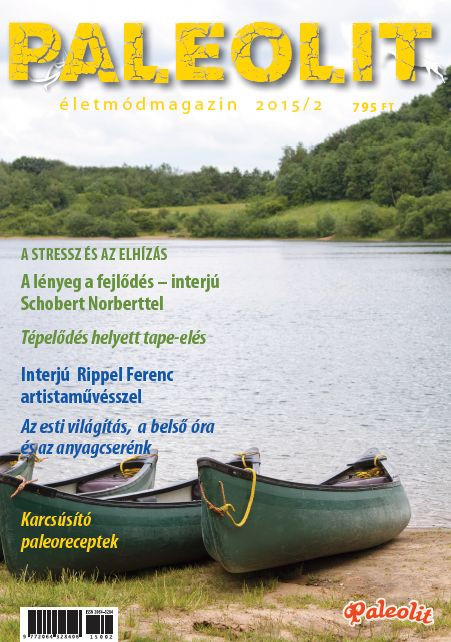
Just as people, their favorite pets also tend to get overweight, as the dry food sold for dogs and cats practically contain the same refined carbohydrates as human food. We also introduce Gary Taubes' slowly becoming a classic yet unfortunately not available in Hungarian, 'Why We Get Fat?' book. It was a great pleasure for us that Rippel Ferenc, a member of the world-famous Rippel Brothers artist duo and a paleoist, gave an interview to our colleague, talking about his life journey and the role of paleo in his life. We asked Schobert Norbert why he felt it was important to start selling Update1 paleo products from now on, and what he thinks nowadays about his earlier critical comments on paleo. The paleo movement received huge media support from Update1, which should be a cause for celebration instead of constant complaining and making defamatory statements. Paleo is not a narrow, elitist, snobbish group's diet, but a public health movement of significant importance. Who ever dreamed that there would be a TV show promoting paleo in the evenings on TV2? Who would have thought that Teletál would advertise paleo on giant billboards? We continue our Paleolithic Kids series: this episode is about how the baby 'talks' to us with its crying, so let's pay attention. In our Conscious Caveman series, we can get to know the 'littering man' in the current episode, and learn what we, as paleo followers, can do so that the waste we produce does not slowly overwhelm us. It is important to emphasize time and time again that paleo is not just a diet, not even simply a lifestyle, but a philosophy, a worldview. In our Science section, from our article on the biophilia hypothesis, we can understand the deep attraction we still have towards our lost 'Eden' environment. Our aesthetic sense, our choices still bear the mark of the 'caveman', so let's bring it to the surface, let's be aware that we have not really changed in 50,000 years, we just wear clothes now, living in a complex world - where, as we can learn from another article, artificial lighting has a serious effect on our biological clock and metabolism. Of course, not everything can be eliminated from our lives, but if we know the risks, we can certainly make better decisions. In our Longevity Peoples series, we now visit Sardinia and Ikaria. Who wouldn't be interested in the secret of longevity? Modern man wants to live long, fears diseases, including cancer, but instead of taking real action, he seeks refuge in fad diets out of fear. Everything can be sold today if it promises to provide a long, healthy life. This is the story of a lifestyle guru's rise and fall. And while we're on the subject of false healing, let's talk about the real healings brought about by paleo. Two people with multiple sclerosis share their encounter with paleo, and fitness world champion Gabriella Bánkuti describes how paleo and targeted exercise help with muscular dystrophy. We hope our new issue has piqued your interest. Don't just read, lend our magazine to your acquaintances as well, let the paleo idea spread. Szendi Gábor