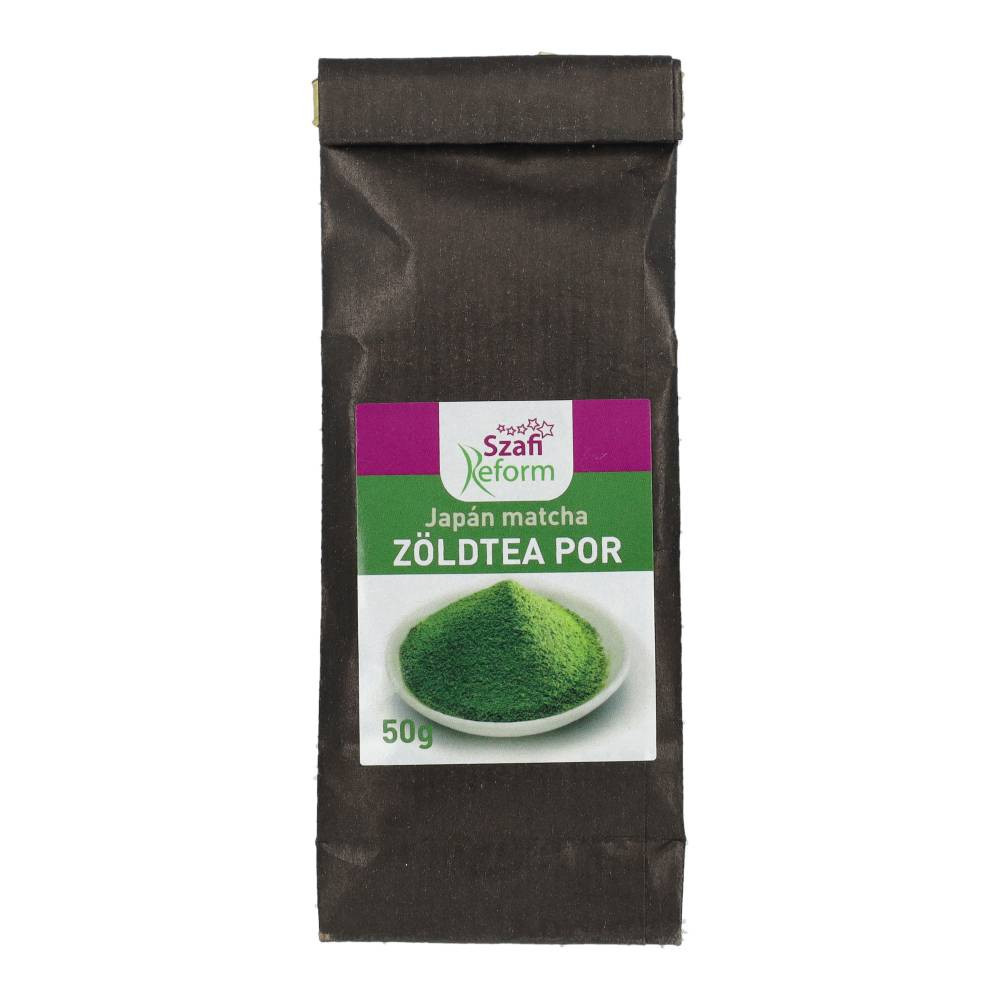
Product Description
What is Matcha tea?
A Matcha tea egy 800 éve létező tea fajta. Eleinte buddhista mesterek és szamurájok használták, de egy ideje már fogyasztják Európában is. A friss tealeveleket finom porrá őrlik, aminek az eredménye a figyelemre méltó zöld szín, csodálatos ízzel és kivételes aromával.
Mitől különbözik a Matcha tea más zöld teáktól?
A Matcha 100 %-os zöld tea, ami finom porrá van őrölve (cca. 5-10 mikron), gyártása közben nem jön létre erjedés. Ha Matcha teát iszik, elfogyasztja az egész tealevelet. Ez a fő oka annak, hogy miért 10x erősebb, mint más hétköznapi zöld tea.
Preparing Matcha tea
Cold:
Blend the tea with water (2 dl - 1.5 l according to taste) and shake well. We recommend adding a few drops of lime or a little fruit syrup to taste. You can achieve a great taste with a mixture of Matcha tea and elderflower syrup. It's important to always mix the Matcha tea thoroughly. Use a shaker or plastic bottle for preparation.
Hot:
Pour the tea (1 bag) with about 70 degrees Celsius water and mix well. It can be helpful to use a small whisk during preparation. You can achieve a great taste by adding honey and lime. For a milder flavor, you can consume it with milk.
More information
What can be made from Matcha tea?
Matcha tea is a unique product in terms of the variety of preparation methods. Matcha tea can be used to make various hot and cold beverages, cocktails, ice cream, and chocolate. Matcha is not only popular among restaurants, cafes, and tea houses, but also among confectioners, chefs, bakers, etc.
The color of Matcha tea
Matcha is a 100% pure green tea. It does not contain any coloring, additives, or preservatives. Its emerald green color comes from the high amount of chlorophyll. Every year, 4 weeks before harvesting, the tea plants are covered. This special shading method reduces the effects of sunlight on the tea leaves by 90%, causing the plants to grow almost in darkness, compensating for the missing sunlight with high chlorophyll production. This is what gives Matcha its emerald green color.
The Quality of Matcha Tea
Just like with wine, when it comes to Matcha tea, we can find a wide range of quality grades. It is important to think about the quality of Matcha tea. The main quality factors include:
- Taste: High-quality Matcha has a soft, smooth and slightly sweet taste. The sweet taste comes from naturally occurring L-theanine amino acids and plant fibers. High-quality Matcha should contain 19.5 mg of L-theanine per gram.
- Color: High-quality Matcha has an emerald green color, while lower quality Matcha tends to have a more yellowish-brown hue. The taste also changes significantly with lower quality.
Composition: 100% Japanese matcha tea (Camellia sinensis)