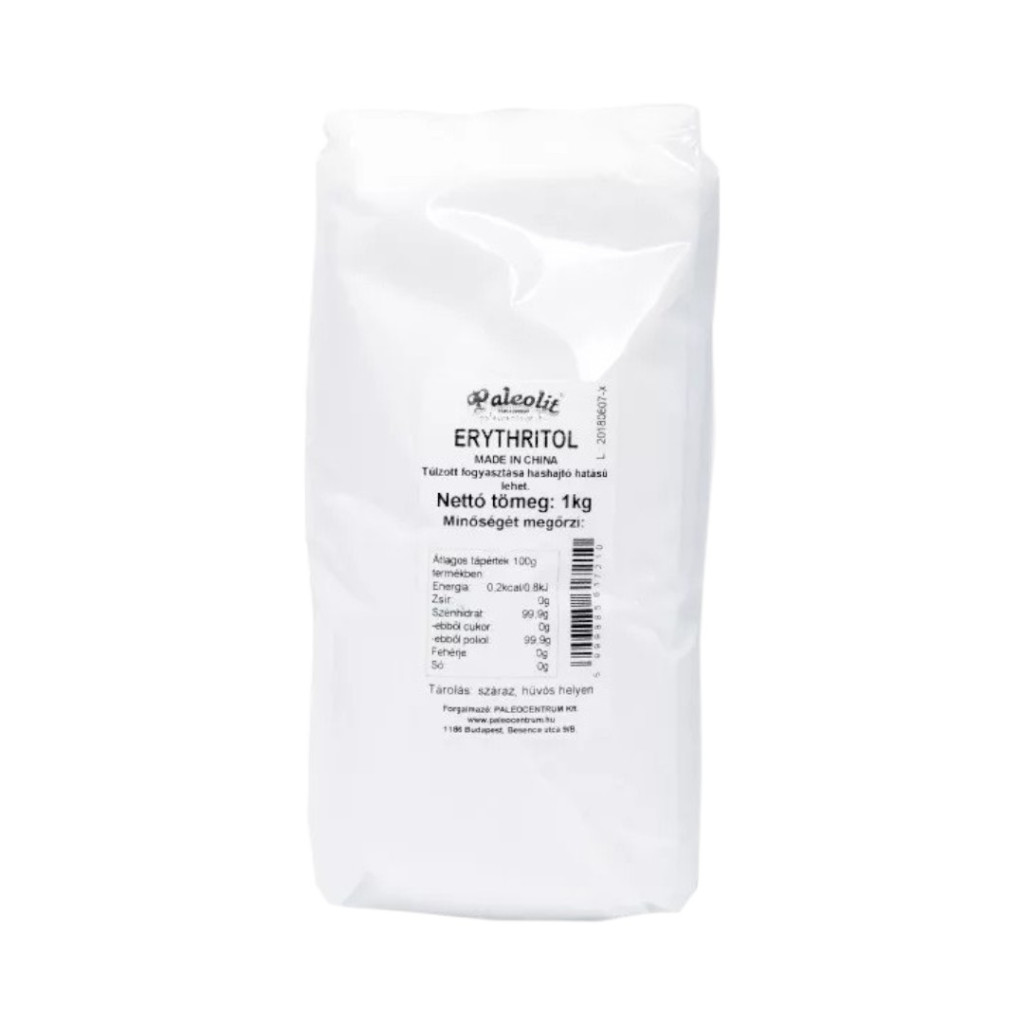
Erythritol (erythritol) 1kg
A plant-based natural sweetener, which is approximately 70% as sweet as sugar. It is recommended for anyone who wants to enjoy the sweet taste without guilt, or who experiences diarrhea from other sweeteners, dislikes their aftertaste, or prefers not to use artificial sweeteners. Kris Gunnar's study on erythritol is available on Gabor Szendi's website: https://www.tenyek-tevhitek.hu/az-eritrit-a-tokeletes-edesitoszer-minden-mellekhatas-nelkul.htm?
What is erythritol?
Erythritol is a natural sweetener that has very few calories, no side effects, and tastes just like sugar. In other words, it has all the advantages of sugar without any of the drawbacks. Is it too good to be true?
Erythritol is a compound belonging to the so-called sugar alcohols class. These molecules are hybrids of some carbohydrate and alcohol (which, however, do not contain ethanol - you know, the one that causes drunkenness).
There are many types of sugar alcohols. These can be found in natural foods like fruits, but are also known as additives in various 'sugar-free' products.
Due to their structure, sugar alcohol molecules have the ability to stimulate the receptors on our tongue responsible for detecting sweet taste.
Some of the most well-known sugar alcohols include xylitol, sorbitol, and maltitol, just to name a few. However, erythritol seems to differ in many ways from other sugar alcohols.
First of all, it contains much fewer calories.
For comparison: a gram of regular table sugar contains 4 calories, xylitol contains 2.4 calories, and erythritol contains only 0.24 calories.
In other words, the caloric content of erythritol is only 6% of sugar's, while its sweetness effect is about 70% of sugar's.
Thanks to its special chemical structure, our body does not break down erythritol. It practically passes through our body without causing harmful metabolic effects like excessive sugar consumption, and does not cause digestive problems like other sugar alcohols.
During industrial production, erythritol is synthesized by fermenting glucose with a special yeast fungus.
Erythritol does not raise blood sugar and insulin levels
The human body does not possess the enzyme necessary to break down erythritol. After consumption, it enters the bloodstream and is excreted from the body with urine.
In a healthy individual, erythritol does not alter either blood sugar or insulin levels, nor does it affect cholesterol levels, triglyceride levels, or any other biomarkers (1, 2). Therefore, erythritol can be an excellent sugar substitute for overweight, diabetic, or individuals suffering from any metabolic syndrome.
Erythritol does not feed bacteria living in the oral cavity
One well-known and recognized harmful side effect of sugar is its impact on oral hygiene and dental health - it can cause tooth decay and promote the formation of plaque.
Harmful bacteria living in the mouth derive their energy from sugar, which they then use to produce and release large amounts of acids that erode tooth enamel.
Other sugar alcohols, such as xylitol, have already found their way into "tooth-friendly" products, as bacteria are unable to digest and convert them into energy.
Studies have been conducted on the effects of erythritol on dental health with mixed results so far. Some studies indicate that consuming erythritol reduces plaque buildup and the formation of harmful bacteria, while others did not show a positive effect on tooth decay (3, 4, 5).
A three-year follow-up study involving 485 school-aged children reports that erythritol provides better protection against tooth decay than xylitol and sorbitol.
What happens to erythritol when it enters our body?
The main issue with consuming sugar alcohols is that they can cause digestive problems for many people.
Since our body is not able to digest all of them, when they reach the intestines, they become food for bacteria.
Well, erythritol differs in this as well from other sugar alcohols.
Most of the erythritol is actually absorbed by the body before it reaches the colon, where most bacteria reside.
Erythritol from the small intestine goes straight into the bloodstream where it circulates for a while and is eventually excreted unchanged in the urine. This process occurs with 90% of the consumed erythritol.
Erythritol and the human digestive system
Although a portion of erythritol reaches the gut bacteria, they cannot metabolize it (8).
Studies have also been conducted where experimental subjects consumed up to 1 gram of erythritol per kilogram of body weight per day (0.45 grams/lb), but the results almost always indicated a high degree of tolerance.
Except for one study, where the intake of 50 grams of erythritol in one serving caused nausea and vomiting in some individuals.
So if we don't consume too much of it at once, there is very little chance that erythritol will cause stomach issues or diarrhea. Of course, it's still important to be cautious, as what constitutes a large amount can vary from person to person.
All in all, erythritol can be considered a safe sweetener. Its potential metabolic and toxic effects have been extensively studied in animal experiments, and the results have consistently shown that even with prolonged consumption in large quantities, erythritol does not have any harmful effects on health (12, 13).
General Concerns About Low-Calorie Sweeteners
I didn't find anything negative about erythritol in any study. However, I am not convinced that all other low-calorie sweeteners are equally harmless. Although they contain hardly any calories, in the long term they can still be associated with obesity and diabetes. There is evidence for this (14, 15, 16, 17).
It may be that part of the reason artificial sweeteners boost the 'reward value' of foods, affecting our brains in a way that makes us eat more involuntarily (18).
Some experts in the field of obesity believe that processed super rewarding foods are the cause of the rapid spread of obesity. Whether this applies to erythritol as well or just to artificial sweeteners like aspartame, I do not know. Time will tell.
Afterword
All in all, erythritol seems to be an excellent sweetener, for the following reasons:
- It practically contains no calories.
- The sweetening effect of artificial sweeteners is approximately 70% of sugar's.
- does not increase blood sugar or insulin levels
- Studies on humans do not show any serious side effects, except for some minor digestive issues in certain individuals.
- Long-term, high-dose intake of erythritol in animal experiments did not reveal any harmful effects.
For those who can't give up on the sweet taste, I previously recommended using stevia or, in small quantities, honey.
However, honey contains a lot of calories and fructose, while many people do not like stevia because of its unpleasant aftertaste.
Well, with erythritol, neither of these problems arise.
Links in the original article: https://www.healthline.com/nutrition/erythritol
Source: Gábor Szendi https://www.tenyek-tevhitek.hu/az-eritrit-a-tokeletes-edesitoszer-minden-mellekhatas-nelkul
The case of success-driven researchers with erythritol: https://www.tenyek-tevhitek.hu/a_sikerehes_kutatok_esete_az_eritrittel.htm?fbclid=IwAR2ZAISL5Z5L0SdxdO_-cIi2VoKfDSeGbZAXTlwHf8Ptu1kNuLUyWy_U0-o
Place of origin: China