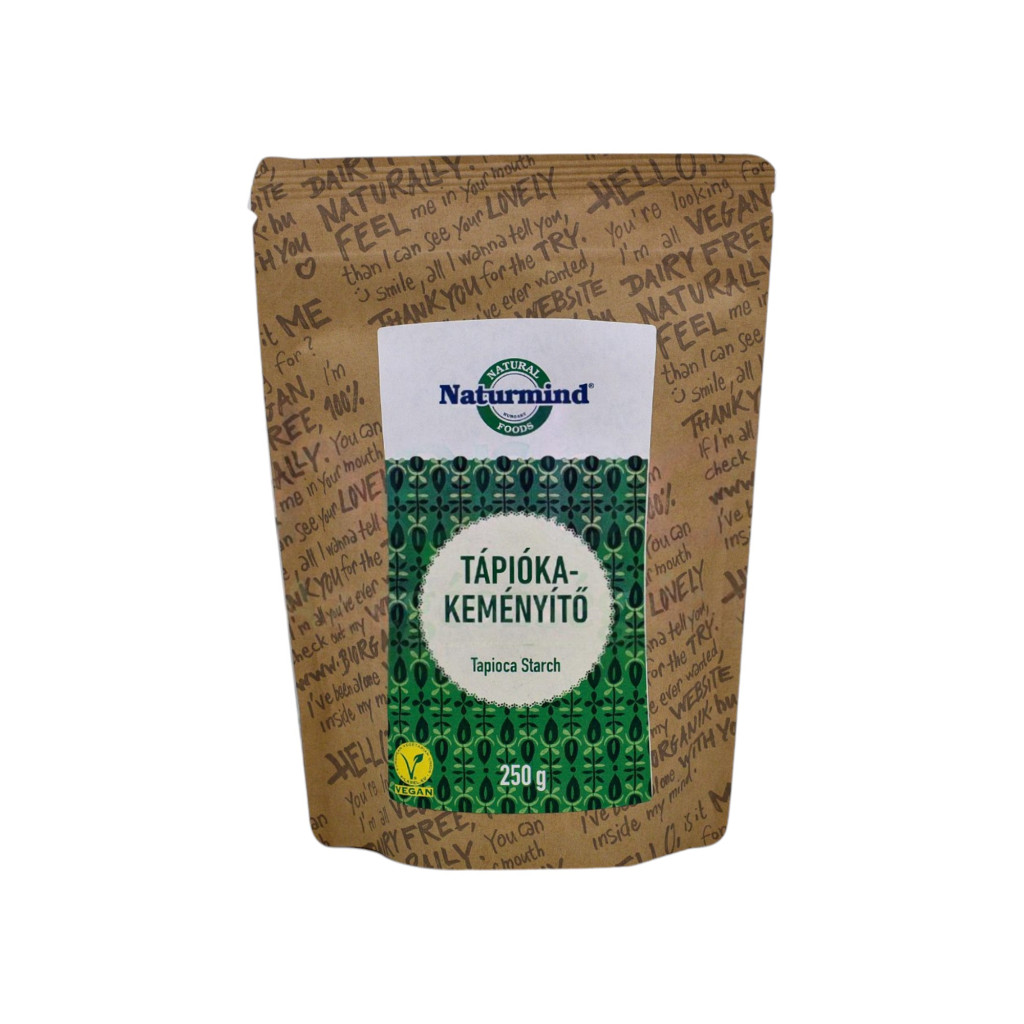
Product Description
Cassava or tapioca is a plant originating from Central and South America, but today it is cultivated in large areas in Asia and Africa as well. Its starchy tuber is primarily used, which is the world's third-largest source of carbohydrates after rice and corn.
Raw tapioca root is not suitable for human consumption, but processed products available in stores are safe to eat. It is mainly used in the form of pearls and powder, but it is also used to produce animal feed and can serve as a raw material in the textile and paper industry due to its high starch content. Interestingly, tapioca is used to make glue, alcohol, and it plays a significant role in biofuel production.
In some countries, the leaf of the plant is also consumed, which contains a much wider range of nutrients than the tuber.
In South America, unleavened bread is made from tapioca starch. It is often used in various flour blends, such as mixed with seed flours. Being gluten-free, it is also commonly found in foods intended for gluten-sensitive individuals.
Importance, impacts:
Tapioca starch contains only carbohydrates (starch). It has an insignificant content of vitamins and minerals. Low in sodium.
Gluten-free.
Usage:
Tapioca starch is a tasteless, odorless, white powder, making it suitable for preparing any flavored, sweet, and savory dishes. It is excellent for making smooth, lump-free sauces and thickening stews.
Gluten-free breads and pastries made with tapioca starch have a nicer texture, more closely resembling that of regular products.
Ingredients: tapioca