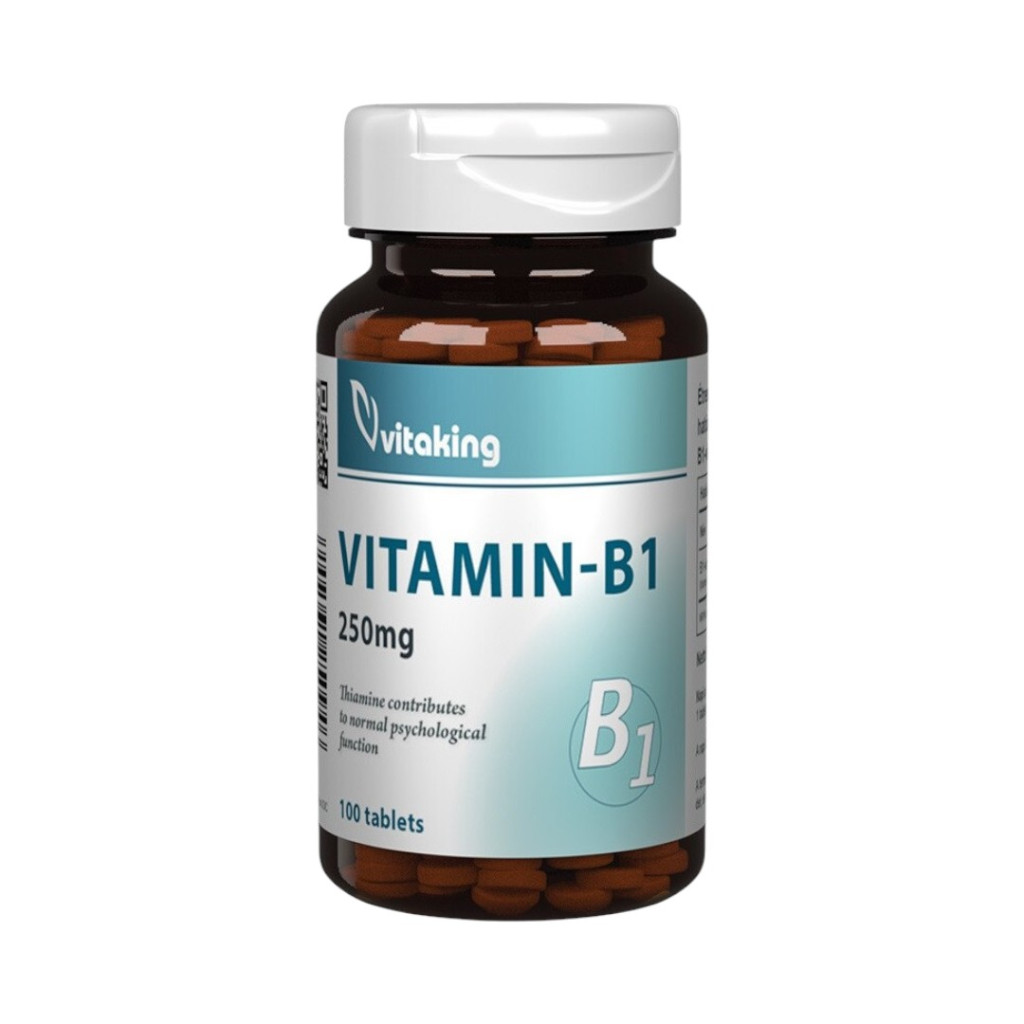
Witamina B-1 250 mg tabletki firmy Vitaking, 100 szt.
Witamina B1 (znana także jako tiamina) rozpuszcza się w wodzie, należy ją uzupełniać codziennie, podobnie jak pozostałe witaminy z kompleksu witamin z grupy B. Witaminę B-1 nazywa się również witaminą etyczną (moralną) ze względu na jej wpływ na układ nerwowy i zachowanie psychiczne. Witamina B1 uczestniczy w normalnych procesach metabolizmu energetycznego, przyczynia się do prawidłowego funkcjonowania układu nerwowego, utrzymania normalnych funkcji psychologicznych oraz do prawidłowego funkcjonowania serca.
Product Description
Vitamin B1, also known as thiamine, is water-soluble and needs to be replenished daily, just like the other vitamins belonging to the B-vitamin complex. Vitamin B1 is also referred to as the morale vitamin due to its effects on the nervous system and mental behavior.
Vitamin B
Vitamin B - of which there are at least nine different types - has a wide range of health benefits. Some B vitamins, such as B1, B2, and B3, play a central role in the process of converting food into energy in the body. Continuous replacement of vitamin B1 may cause a deficiency in vitamin C, so it is advisable to use them proportionally together.
Effects of B1 vitamin:
- Thiamine is involved in normal energy-producing metabolic processes.
- Thiamine contributes to the normal functioning of the nervous system.
- Contributes to maintaining normal psychological function.
- Vitamin B1 also contributes to the proper functioning of the heart.
A little history
Kazimierz Funk, a Polish biochemist, was the first developer of the vitamin concept. In 1904, he obtained his Ph.D. in organic chemistry from the University of Bern. After getting his degree, he worked first at the Pasteur Institute in Paris, and then conducted laboratory experiments at the Lister Institute in London (1910). He dedicated his research to isolating a substance found in brown rice that was previously unknown. In 1912, he succeeded in extracting this substance from rice bran, and because the substance contained an amino group, he named it vita amine (vitamin), combining the words vita (life) and amine (nitrogen-containing compound). (The final