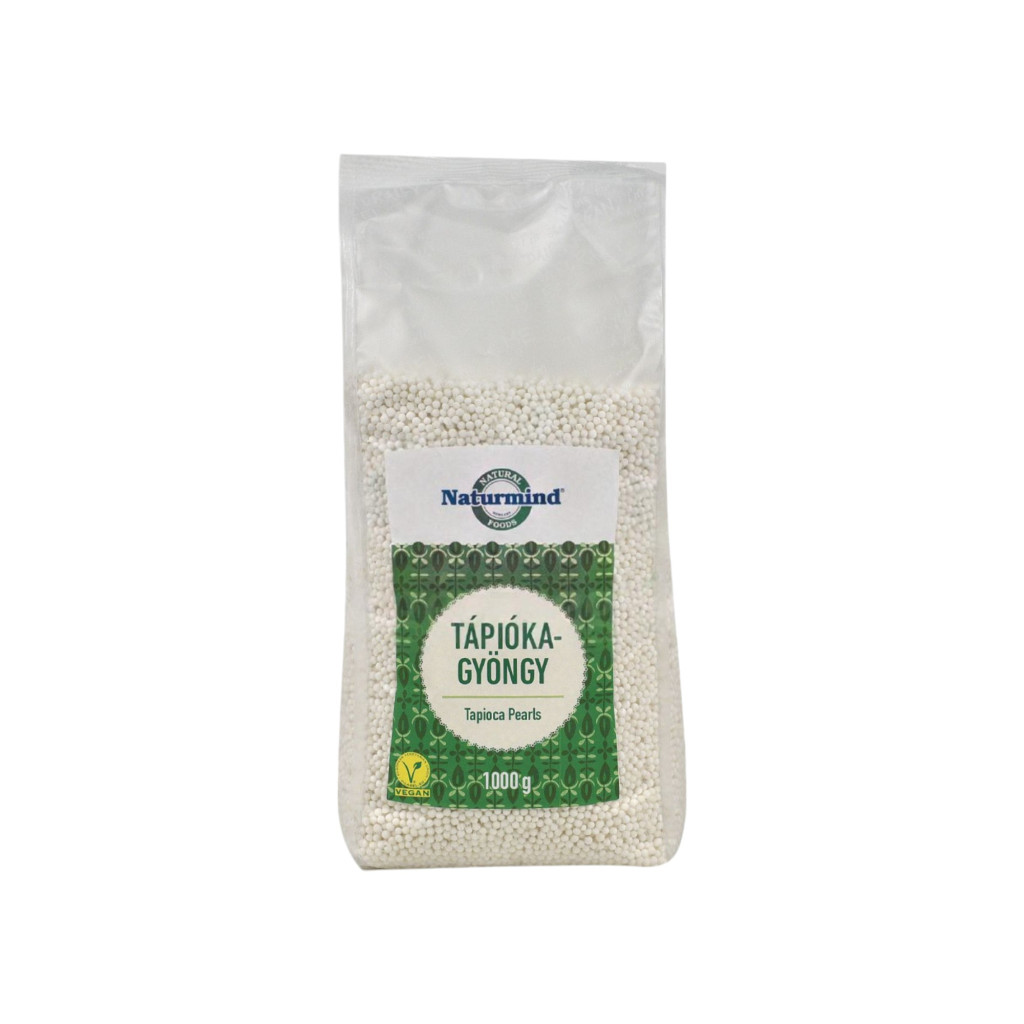
Product Description
Ingredients: tapioca starch
Maniok oder Tapioka ist eine Pflanze aus Mittel- und Südamerika, die heute jedoch auch in Asien und Afrika in großem Umfang angebaut wird. Hauptsächlich wird die Knolle der Pflanze verwendet, die nach Reis und Mais die weltweit bedeutendste Kohlenhydratquelle darstellt.
Die Tapiokaknolle ist roh nicht für den menschlichen Verzehr geeignet, nach der Verarbeitung sind die Produkte, die in Geschäften erhältlich sind, unbedenklich. Es wird hauptsächlich in Form von Perlen und Pulver verwendet, aber auch als Tierfutter und aufgrund seines hohen Stärkegehalts als Rohstoff für die Textil- und Papierindustrie. Interessanterweise werden auch Klebstoffe und Alkohol daraus hergestellt, und in der Produktion von Biotreibstoff spielt es ebenfalls eine herausragende Rolle.
In einigen Ländern werden auch die Blätter der Pflanze konsumiert, die eine viel breitere Palette an Nährstoffen enthalten als die Knolle.
Tapiokaperlen werden aus der Tapiokaknolle hergestellt, ohne Zusatzstoffe. In Südostasien ist es ein beliebter Rohstoff, der vor allem für Desserts und Spezialitäten wie Bubble Tea verwendet wird.
Bedeutung und Auswirkungen:
Tapioca mainly contains carbohydrates, starch, and only a small amount of fiber, so its glycemic index is high, quickly raising blood sugar levels. Therefore, it is suitable for rapid energy gain (for athletes), but not recommended for those looking to reduce their body weight. Diabetics should also avoid it for the same reason. Tapioca contains a small amount of protein and its fat content is negligible. Its vitamin and mineral composition is not particularly significant. It is low in sodium. Tapioca is a naturally gluten-free food, so gluten-sensitive individuals can consume it without worry. It does not contain lactose, making it suitable for lactose- and dairy-free diets as well.
Usage:
When we think of tapioca pearls, tapioca pudding usually comes to mind, which can be consumed not only on its own but also as a topping for desserts and cakes, as well as a decorative element for a special dish. Due to its water-absorbing capacity, it can also be used as a thickener or even as an ingredient in soups (it looks great in fruit soup). To prepare tapioca pudding, first soak the tapioca pearls in water or plant-based milk for 10-15 minutes, then cook them over low heat, stirring constantly and adding flavor as desired, until it thickens (around 10-15 minutes). Spoon the mixture into small bowls and let it cool. Because tapioca has a neutral flavor, it can be used to make both sweet and savory puddings. It tastes best with fresh, juicy fruits. If you want to surprise your guests with a truly special yet very simple drink next time, make them bubble tea with tapioca pearls! Simply soak the tapioca pearls in black or strong-colored fruit tea, then allow the pearls to swell and absorb the tea's color. After that, rinse the swollen pearls with cold water, strain them, and shake them vigorously in a shaker or, if unavailable, in a glass jar. Serve in a decorative glass with a thick bamboo straw.