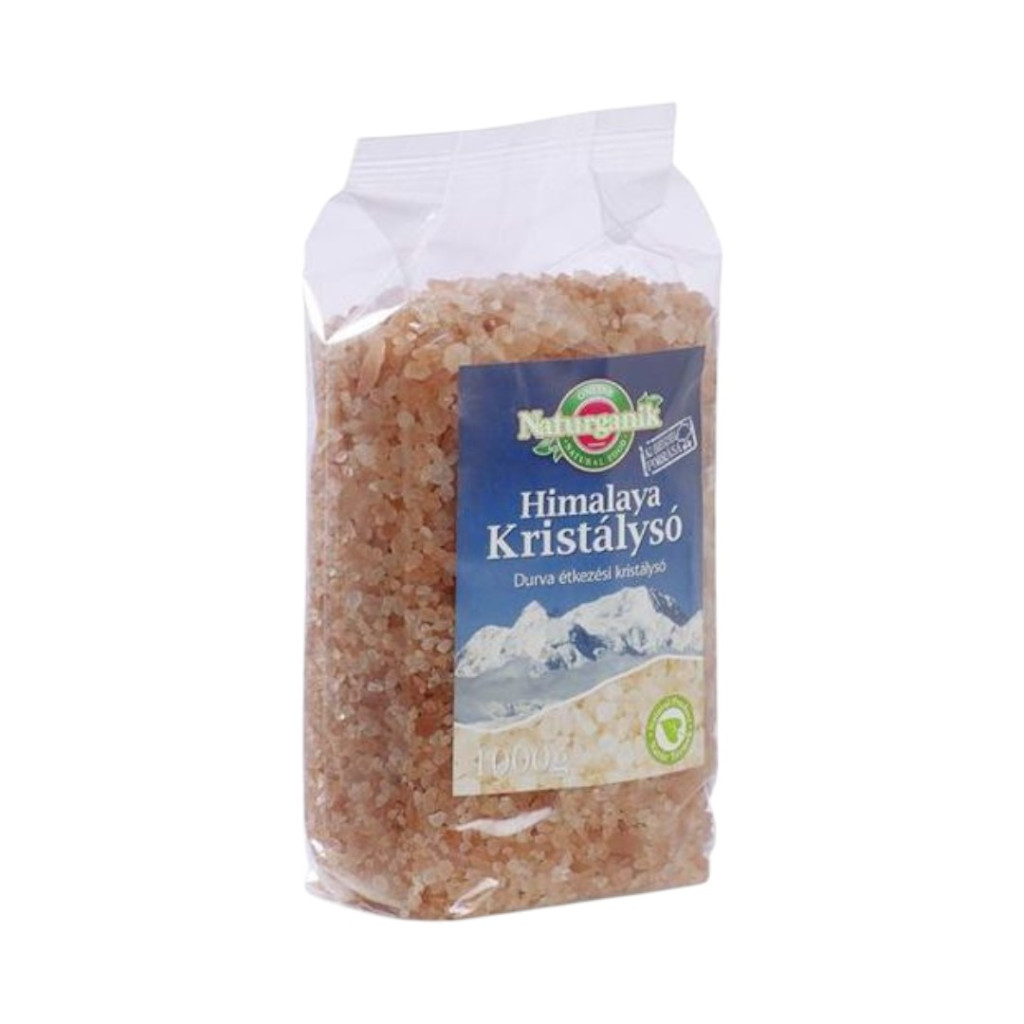
Product Description
Himalayan salt comes from the Punjab region of Pakistan. It is largely mined by hand to this day and undergoes minimal processing. No additives are added and its color comes from the minerals it contains, not from artificial dyes.
Significance, impact:
Like table salt, Himalayan salt is primarily made up of sodium chloride (98%), but it also contains many other minerals. While this may seem attractive, considering the small amount used for manual salting, the intake of minerals is almost negligible. For those who need to watch their salt intake due to health reasons, it's not advisable to consume Himalayan salt in excess. If your doctor has recommended iodized salt, it is better to opt for that, as Himalayan salt does not contain iodine (or you must obtain your daily iodine intake from other sources).
Usage:
It is similar to common table salt, it has no aftertaste and dissolves similarly. It can be used for purposes other than nutrition, for example in bath salt mixtures Himalayan salt is also used.
Ingredients: salt