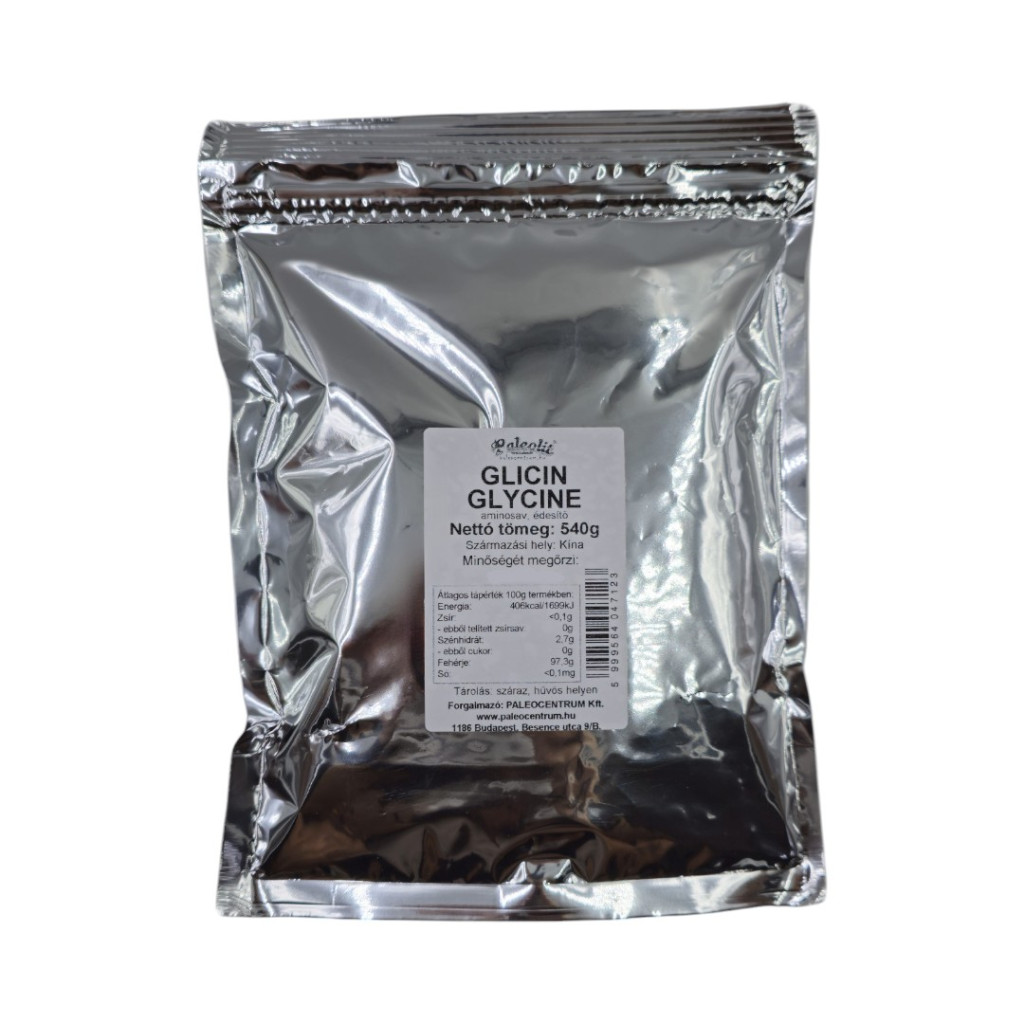
Glicină - 540 g de glicină paleolitică într-un borcan, îndulcitor
Glicina reduce nivelul de inflamație din organism, întărește mușchii și țesuturile conjunctive, netezește ridurile, ajută la un somn odihnitor și regenerează ficatul - și tot ce trebuie să faci este să consumi un singur cocktail la micul dejun!
What is glycine?
Glycine is one of the amino acids that make up many proteins, and it is, in fact, the smallest of all, yet it plays a crucial role in the synthesis of other amino acids, glutathione, creatine, heme (part of the hemoglobin in red blood cells), as well as in RNA/DNA synthesis, and it also aids in the absorption of calcium. [1, 2].
Glycine as a nutrient
Glycine is considered quasi-essential by many, as the body can synthesize it on its own, but it can also be ingested through food. However, often even a combination of both is not sufficient to supply all the tissues, bones, muscles, and skin with glycine that would need it.
The human body produces roughly 3 grams of glycine per day, and we consume an additional 1.5-3 grams through food intake, resulting in an average daily intake of 4.6-6 grams of glycine [3].
On the other hand, according to twenty years of nutritional research, this is not enough to cover the ideal amount required by the body's metabolic processes, so it would be desirable to supplement it from outside [3].
A study shows that the vast majority of people do not consume significantly less glycine than what is needed for all metabolic processes - which is approximately 10 grams per day for a 70 kg adult [3].
The beneficial effects of glycine
1) Reduces inflammation
Glycine acts directly on inflammatory cells by inhibiting the activation of certain genes, as well as the formation of free radicals and inflammatory cytokines [4].
Glycine reduces TNF-alpha (tumor necrosis factor-alpha) and enhances the production of interleukin-10 [5]. The former is a pro-inflammatory molecule, while the latter has anti-inflammatory effects.
In diabetic patients, glycine can reduce TNF-alpha levels and increase interferon (IFN)-gamma levels [5]. Both processes have anti-inflammatory effects.
Glycine significantly inhibits the activation of NF-kB (nuclear factor-kappa B) and the production of IL-6 in cardiac artery cells [6]. Both effects reduce inflammation of the arteries and atherosclerosis.
In cases of liver damage caused by endotoxins (toxins produced by organisms such as bacteria), glycine enhances the production of anti-inflammatory IL-10, thereby increasing the chances of survival for the affected individual [7].
In poisoned mice, glycine significantly increases their chances of survival by reducing the effectiveness of the endotoxin receptor and the level of TNF alpha, and by suppressing the inflammation-inducing NF-kB.
Mice fed with a high glycine diet (5%) were completely protected from dying after injection with toxin from E.Coli bacteria, as glycine neutralized TNF-alpha. In contrast, 50% of mice in the control group died within 24 hours.
In the same study, rats with liver damage were fed with glycine, then injected with endotoxin. The result was that 83% of the rats survived, while in the control group that did not receive glycine, the survival rate was 0% [8].
Glycine plays an important role in reducing the oxidative stress levels in the body [9].
As a precursor to glutathione, glycine can restore the body's previously low levels of glutathione [10, 11]. Glutathione is one of the important antioxidants in the body.
Glycine is particularly recommended for older people, as the level of glutathione in the body decreases with age [12].
2) Helps with sleep and reduces the need for sleep
Taking glycine before bedtime improves the quality and efficiency of sleep, speeds up falling asleep, and increases the duration of restful, slow-wave sleep (deep sleep) [13].
Taking glycine before bedtime can help reduce daytime sleepiness and improve performance on tasks that require good memory.
Glycine improves REM sleep and reduces non-REM sleep duration [14].
Volunteers who were given 3 g of glycine before bedtime felt less tired the next day, and reported feeling "sharper and more energetic," and having a "clearer head" [15].
All evidence points to glycine reducing daytime fatigue and drowsiness caused by sleep deprivation [16].
Glycine has an effect on certain neuropeptides in the hippocampus area that regulates the circadian (daily) rhythm. The circadian rhythm regulates the daily rhythm of bodily processes. From blood pressure to body temperature to the levels of various hormones, everything changes according to the circadian rhythm.
Specifically, glycine increases the levels of substances in the brain that play a crucial role in the formation of circadian rhythms.
Through its effect on the appropriate cell groups of the hypothalamus, glycine indirectly contributes to reducing drowsiness and fatigue caused by sleep deprivation [16].
3) Smoothes out wrinkles
Consuming glycine (or collagen) significantly enhances skin elasticity and hydration in older women [17, 18]. Ultimately, one of the causes of wrinkles is the long-term deficiency of glycine and collagen protein. The deficiency is due to the fact that we primarily consume muscle meat and do not usually eat cartilage, offal, and skin.
Collagen protein containing a lot of glycine effectively reduces skin damage caused by UV-B radiation and slows down skin aging [19].
Women who received 2.5 grams of collagen protein daily for four weeks showed a 20% reduction in the amount of wrinkles around the eyes, and this positive effect persisted after the study was completed [20].
In 8 weeks, collagen significantly increased the skin's type I pro-collagen content by 65% and its elastin content by 18%.
Glycine nearly doubles the speed of healing skin ulcers [21].
In experiments with diabetic animals, glycine promoted wound healing [22].
When combined with glycine, L-cysteine, and DL-threonine, it significantly accelerates the healing of ulcerative wounds and reduces pain even when used externally [23].
4) Good for the gut
Glycine inhibits acid production in the stomach, thus protecting against ulcers caused by various chemical substances and stress [4].
Glycine has a significant anti-ulcer effect [24].
Glycine has been found to have a protective effect against chemical-induced colitis in animals [25].
In animals, glycine has been found to help prevent alcohol-related stomach issues (such as ulcers) when given as a preventative measure.
Glycine is capable of significantly increasing tolerance to aspirin in the upper gastrointestinal tract [26]. (One of the dangerous side effects of aspirin and generally nonsteroidal anti-inflammatory drugs is gastric and intestinal bleeding.)
Following organ or tissue transplantation, glycine alleviates smooth muscle dysfunction and reduces inflammation in the tissues of the small intestine [27].
According to animal experiments, glycine and not L-arginine is the one that protects the intestinal wall and the integrity of the intestinal mucosa during radiotherapy applied to cancer patients [28].
Laboratory studies have shown that glycine protects intestinal cells against oxidative stress. [29].
5) Protects the thyroid gland
Glycine most likely enhances the conversion of T4 to T3 in the liver (but this has only been studied in certain species of fish) [30].
6) Stimulates brain function
Glycine has been proven to dilate the capillaries in the brain by up to 250% even in small quantities [31, 32].
In rats suffering from alcohol poisoning, glycine reduced the levels of cholesterol, free fatty acids, and triglycerides in their blood, liver, and brain. Finally, brain swelling and thus brain pressure also decreased in their brains, which is particularly important in cases of brain injury, brain surgery, and brain tumors [33].
Glycine deficiency in the brain can have a negative impact on the brain neurochemistry, the synthesis of collagen, RNA/DNA, porphyrins, and other important metabolic products [34].
7) It has a positive impact on people suffering from mental illnesses
Glycine supplementation significantly reduces symptoms of obsessive-compulsive disorder and body dysmorphic disorder [35].
Glycine has been used successfully in the treatment of obsessive-compulsive disorder in adults [36].
Glycine supplementation also resulted in significant improvement in the treatment of schizophrenia symptoms [37].
In the case of difficult-to-treat schizophrenia, glycine improved cognitive functions and alleviated depressive symptoms (at a dosage of 0.8 g/kg).
Not surprisingly, the best results were achieved by the group that was most deficient in glycine [38].
Glycine helps patients with chronic schizophrenia by enhancing neurotransmission through the NMDA receptor [39].
Through its effect on signal transmission via NMDA receptors, glycine enables the synergistic action of medications and glycine in the treatment of schizophrenia, enhancing each other's effect [37].
8) Helps overcome depression
According to observations, people with depression have low levels of glycine in their blood, but high levels of an amino acid called taurine [40].
9) It can be effective against obesity
Glycine increases the body's adiponectin levels, which helps in weight loss [41]. Adiponectin is a hormone that regulates the metabolism of the entire body through its effects. It improves insulin sensitivity, reduces visceral fat mass, plasma triglyceride levels, and increases protective HDL cholesterol levels.
10-11) Helps people with diabetes and other metabolic disorders
Glycine may provide effective assistance for people with diabetes and other metabolic disorders [2].
In rats fed with sucrose, glycine supplementation reduced the levels of free fatty acids in their blood, the size of cells in their adipose tissue, and also lowered their blood pressure [42].
Glycine reduces glycated hemoglobin (HbA1c) levels, thus lowering average blood sugar levels. HbA1c reflects the average blood sugar level over the past 3 months. The dosage is 5g/day [5].
The 5 grams of glycine taken in the morning improved insulin response in healthy first-degree relatives of type 2 diabetic patients as well [43].
Glycine stimulates the production of the hormone glucagon, which helps stabilize blood sugar levels if they become too low.
Diabetic patients have an average 26% lower glycine level in their blood compared to the 'normal' population [45].
Glycine (+cysteine) restored normal glutathione synthesis in untreated diabetes and patients suffering from hyperglycemia [10].
Glycine helps prevent metabolic syndrome in patients suffering from oxidative stress [9].
12) Helps maintain glucose balance
Glycine improves the lipid profile of patients with insulin resistance (but does not cure insulin resistance).
Glycine has a positive effect on blood sugar levels as it stimulates the production of glucagon hormone, which plays a role in the effective functioning of insulin [44].
13) Reduces inflammation caused by fructose
When different sugars were given to mice, it was observed that TNF-alpha (tumor necrosis factor alpha) was significantly higher in mice fed with fructose [47].
Glycine has a protective effect against the harmful effects of fructose by inhibiting the release of inflammation-causing cytokines (TNF-?, IL-6) in the organism consuming fructose [48].
14-15) Good for the heart and lowers blood pressure
During the restoration of blood flow following a heart attack, glycine helps prevent heart muscle cells from sudden increased oxygen supply by reducing the permeability of the mitochondrial wall within them [49].
In case of a heart attack, intracellular glycine enhances cell survival chances following increased oxygen levels after oxygen deprivation [49].
Glycine may reduce systolic blood pressure in patients with metabolic syndrome [9, 46].
16-18) Good for joints, bones, and muscles
Glycine protects against joint inflammation [4].
Combined with green tea, glycine promotes the organization of collagen fibers, helping tendons to regenerate after inflammation [50].
Glycine is beneficial for women in menopause, as it has bone-protective properties similar to estrogen [51].
Glycine, as demonstrated in mouse experiments, can play a significant role in improving the quality of life for patients suffering from osteoarthritis [51].
19) Good for the liver
In laboratory experiments, glycine inhibited the leakage of lactate dehydrogenase enzyme in rat liver cells, which is one of the indicators of cell death [52].
When rats suffering from alcohol poisoning were given glycine, the levels of cholesterol, phospholipids, free fatty acids, and triglycerides decreased in their blood, liver, and brain, and eventually their liver disorder caused by fat accumulation ceased [33].
Glycine supplementation has a hepatoprotective effect in rats deficient in choline and methionine [53].
Glycine reduces liver damage and mortality in rats suffering from severe bacterial infection (sepsis) [54].
According to animal experiments, glycine maintains the blood D vitamin level artificially induced by bile duct obstruction in liver disease and slows down the pace of liver damage [55, 56].
If an animal consumed glycine for five days before complete or partial hepatectomy in an animal experiment, there was a significant decrease in liver and liver enzyme damage [57].
Glycine maintains proper mitochondrial function and bile composition in animals with liver damage [58].
20) Slows down the absorption of alcohol
Glycine slows down the absorption of alcohol by reducing the speed at which the stomach absorbs and then empties alcohol into the intestines [59].
The blood alcohol levels were significantly lower in those who received glycine before consuming a larger amount of alcohol compared to those who did not receive glycine [60].
21) Good for the kidneys
The renal tubules (proximal tubules) proved resistant to oxygen deprivation when glycerin was added to the test tube [61].
22) Prevents tooth decay
In rat experiments, a 4% increase in glycine resulted in a 65.7% reduction in the incidence of dental caries [24].
23) Helps stroke patients
Administration of 1-2 grams of glycine per day to patients suffering from ischemic stroke has been successful in normalizing autoantibodies, reducing levels of glutamate and aspartate, increasing GABA concentration, and decreasing lipid peroxidation [62]. Glutamate and aspartate can cause neuronal cell death due to increased excitatory effects.
Moreover, regularly consuming small amounts of glycine may cause less damage in the health of a person during a future stroke [62].
Daily intake of 1-2 grams of glycine reduces the risk of mortality beyond 30 days [62].
Combining 500 mg of glycine per kilogram of body weight with 500 mg of piracetam (e.g. Nootropil tablets) in stroke animals reduced cognitive impairments and assisted in the regeneration of the prefrontal cortex [63].
Glycine supplementation
How much glycine should I take?
I (the author!) try to consume 3-5 grams of glycine daily in either pure glycine powder or in the form of 20 grams of collagen.
The side effects of glycine
Glycine may have a calming effect [62], so many suggest taking it in the evening.
The potential negative effects of glycine
Taking glycine is not recommended for those suffering from diarrhea as it can worsen the patient's condition and increase dehydration [65].
Foods high in glycine
Glycine can be obtained from glycine, collagen, or gelatin, and the following foods have high glycine content:
- collagen powder
- gelatin
- white fish
- egg
- chicken
- turkey
- pork
- beef
- seeds
- vegetables
Collagen contains 22-30% glycine. If we add 1-2 tablespoons of it to our morning smoothie every day, we consume about 2.5-3.5g of glycine per tablespoon.
Source: https://www.tenyek-tevhitek.hu/a_glicin_23_jotekony_hatasa.htm Here are the references [1-65] mentioned in the description.