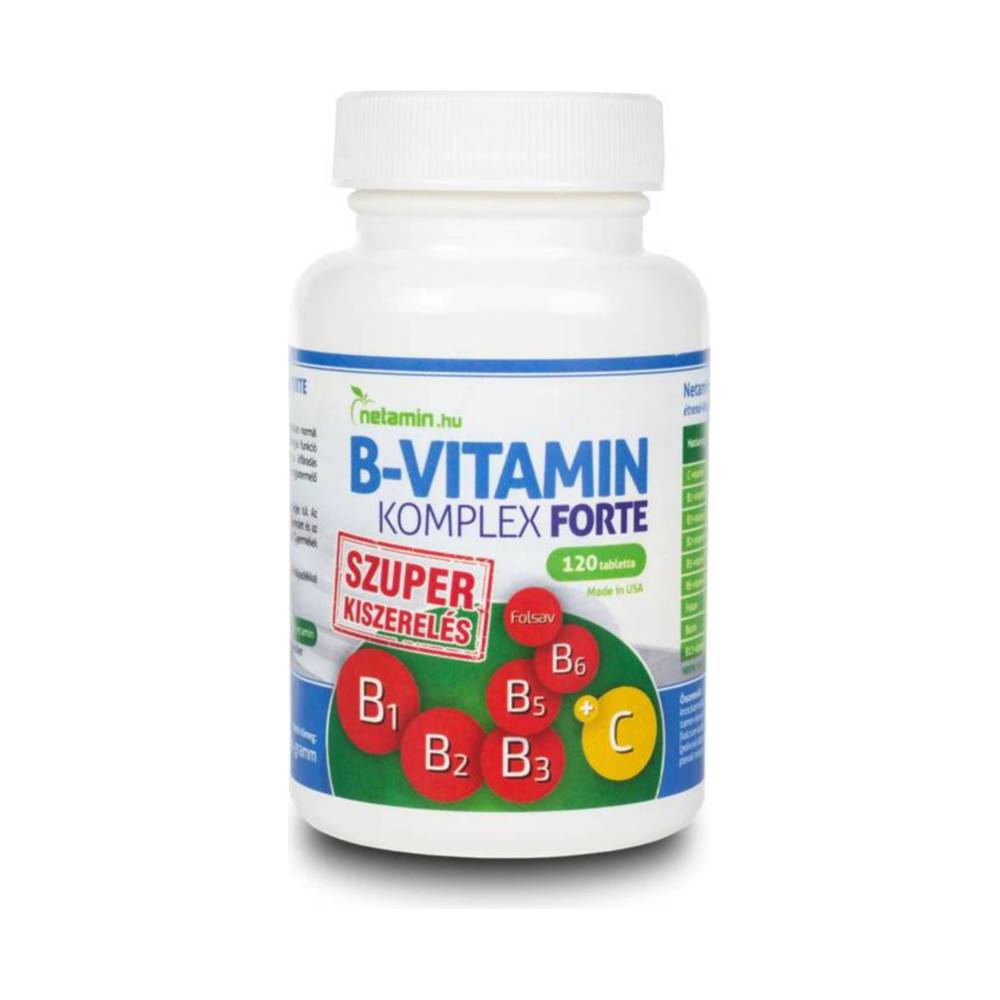
Product Description
B vitamins are commonly referred to as a complex because they are never found in isolation in nature, but are always found together. The members of the B-complex group play numerous important roles in our body, but we most commonly encounter them in the context of fighting fatigue, maintaining a healthy nervous system, and supporting healthy metabolic processes. Since B vitamins are closely linked to each other - they participate together in energy production processes, in the functioning of the nervous system - and enhance each other's effects, it is advisable to take them together. Of course, each B vitamin also has unique properties, which you can read about in more detail below. What is each B vitamin good for? The body needs all B vitamins, and one does not replace the other. Our body cannot produce any of them on its own. Being water-soluble vitamins, they are easily excreted from the body, so we need to replenish them daily. B1 vitamin (thiamine): Primarily responsible for the normal functioning of enzymes that convert carbohydrates into energy, as well as for the transmission of signals between the spinal cord and the brain. It also contributes to the proper functioning of the heart and nervous system. Smoking, alcohol or excessive sugar consumption, taking oral contraceptives increases the need for this vitamin. B2 vitamin (riboflavin): It helps in the structure of skin and mucous membranes, has an important role in detoxification, and helps protect cells against oxidative stress. It protects the eye mucosa, improves visual adaptation, and supports normal vision. B3 vitamin (niacin): Like the other B vitamins, B3 plays a role in protein, fat, and carbohydrate metabolism, as well as contributes to energy production processes, and to reducing fatigue and tiredness. In addition, B3 vitamin also has an impact on the regeneration of muscles and nerves, and is involved in various hormonal processes. B5 vitamin (pantothenic acid): It participates in more than a hundred important physiological reactions, including the metabolism of fatty acids and the synthesis of sex hormones. B5 vitamin is involved in normal energy production processes, can help maintain skin and hair health. It also assists the body's defense work through the synthesis of antibodies. It can be effective against fatigue, stress, can alleviate withdrawal symptoms from smoking cessation, and allergic reactions. B6 vitamin (pyridoxine): Its main task is to control protein and amino acid metabolism: it functions as a coenzyme in more than sixty enzyme systems. The presence of B6 vitamin is important for the normal functioning of the immune system, maintaining normal psychological functions, normal red blood cell formation, and the normal functioning of the nervous system. It contributes to the regulation of hormonal activity. B7 vitamin (biotin): Biotin is often called the beauty vitamin, as it greatly contributes to the health of the skin, hair, and nails. It plays a role in healthy cell growth and in the entire metabolism of our body. It contributes to maintaining normal psychological functions, normal functioning of the nervous system, and preserving the normal condition of mucous membranes. B9 vitamin (folic acid): It plays a very important role in several areas of the body, unfortunately, folic acid deficiency is one of the most common deficiencies among vitamins. In Hungary, the average daily folic acid intake for women is 144 mcg, for men 169 mcg, while the optimal intake should be between 400-660 mcg. Folic acid contributes to normal blood formation and is involved in the normal synthesis of amino acids. During pregnancy, it participates in the growth of maternal tissues. B12 vitamin (cobalamin): One of the most important members of the B vitamin family. Signs of deficiency may include fatigue, irritability, dry skin, and brittle hair. B12 contributes to the normal functioning of the nervous and immune systems, reducing fatigue, and helps maintain normal psychological functions. It is particularly recommended for vegans, vegetarians, or those with an inadequate diet. ... plus EXTRA C vitamin! There are several advantages to taking B vitamins and vitamin C together. B9 and B12 vitamins, working together with vitamin C, help in the formation of red blood cells and the production of DNA (genetic material), which are the basic building blocks of the body. Vitamin C assists in the metabolism of folate (B9 vitamin). If there is not enough vitamin C in the body, it can lead to folate deficiency. Continuous intake of B1 vitamin can cause vitamin C deficiency, so it is advisable to use them proportionally together. During stress, the body quickly depletes its reserves of B and C vitamins. Both B vitamins and vitamin C have stress-reducing, fatigue-reducing effects, and support the nervous and immune systems - hence, taking them together is beneficial. Who should consider taking them? The truth is that everyone needs B vitamins as they are essential for the human body. Many people are not even aware that their physical and mental complaints - such as fatigue, lack of concentration - may be due to a lack of B vitamins. However, in certain life situations, taking a B vitamin complex is highly recommended.
- For those struggling with neurological issues, as most B vitamins are necessary for the healthy functioning of the nervous system.
- In cases of stress, our body's nutrient and energy reserves can become depleted due to regular and prolonged tension. B-vitamins and vitamin C are well-known to reduce stress and strengthen the nervous system.
- Vegetarians, vegans, because vitamin B12 deficiency is very common in such cases.
- Athletes benefit from B-vitamins and vitamin C as they are involved in normal energy production and support the healthy function of the immune system.
- For the weary, as B-vitamins and vitamin C contribute to reducing fatigue and exhaustion.
- Recommended for those performing increased mental and physical work, as B-complex vitamins help enhance concentration, improve memory skills, and positively impact physical performance.
- In case of hair and skin problems (such as dry, brittle hair, hair loss, dry skin), B vitamins and vitamin C help maintain skin and hair health in many ways.
- To boost the immune system, because vitamin B6, B12, C, and folic acid contribute to the normal functioning of the immune system.
Ingredients: Emulsifiers (microcrystalline cellulose, croscarmellose sodium, hydroxypropylmethylcellulose), ascorbic acid, thiamine mononitrate, bulking agent (sorbitol), anti-caking agents (calcium carbonate, silicon dioxide), niacinamide, riboflavin, coating (polyvinyl alcohol), calcium d-pantothenate, pyridoxine hydrochloride, folic acid, biotin, cyanocobalamin