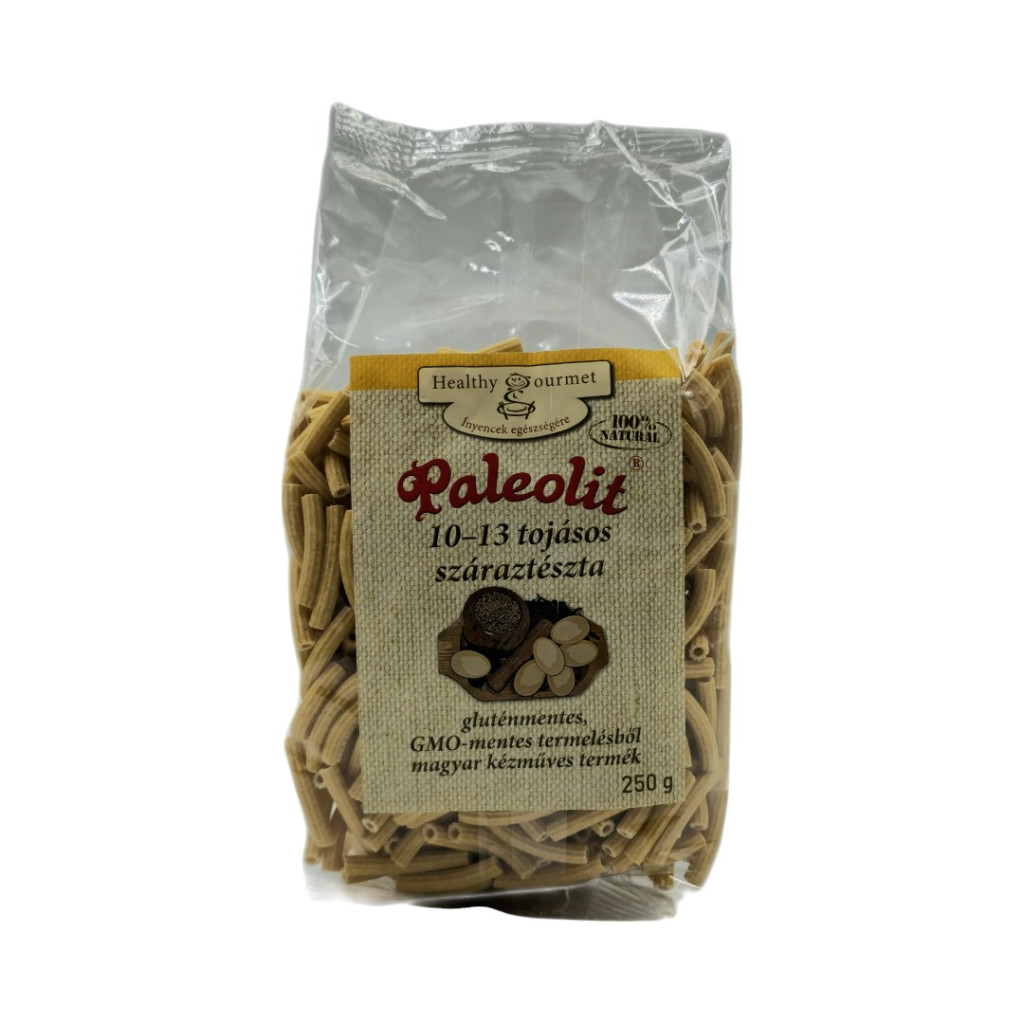
Paleo sesame dry pasta was created so that those following a paleo diet can enjoy the pleasures of pasta consumption, as well as all those who avoid consuming gluten and other allergenic and/or gut-irritating substances. In addition, the carbohydrate content of Paleo sesame dry pasta is low (it contains about 40% less carbohydrates than traditional pastas!), and due to its higher phytate content, only a fraction of these few carbohydrates is absorbed, as phytates reduce the breakdown of starch into sugar. Because of its low absorbable carbohydrate content, it is also recommended for diabetics and those on a weight-loss diet.
Paleo sesame dry pasta not only does not contain gluten, but also lacks prolamins, lectins, and saponins. These substances would increase intestinal permeability and inflammation. Saponins can bore tiny holes in the intestinal wall, prolamins can irritate the intestinal wall causing inflammation, and lectins can alter the structure of the intestinal wall, making it more permeable, allowing substances to pass into the bloodstream that may induce autoimmune processes. Corn, rice, buckwheat, quinoa, millet, wheat, barley, durum, oats, amaranth, lentils, beans, chickpeas, and all types of grains and legumes contain such prolamins, lectins, and often saponins in high quantities. The components of gluten itself belong to the groups of lectins and prolamins and have similar effects on the body. Many gluten-free foods are made from corn, oats, and other ingredients containing prolamins and lectins. However, Paleo sesame dry pasta is free from these substances and is low-carb!
About the ingredients used for Paleolithic sesame pasta:
Cold-pressed sesame flour:
There are two problems with ground seeds. One is that due to their high oil content, close to 50%, they cannot be ground to a flour-like consistency. The other is that the majority of their high oil content consists of omega-6 fatty acids, which are crucial to avoid in order to achieve the correct omega-6/omega-3 ratio. Therefore, in the production of Paleolithic sesame dry pasta, we gently, chemically-free, cold-press extract a significant portion of the oil content from the sesame seeds used. Only 20% of the original oil content remains in the sesame seed flour thus obtained. The resulting sesame seed flour has nearly double the mineral, protein, and fiber content compared to plain ground seeds.
Allergen-free tapioca starch:
The tapioca starch used in Paleolithic sesame dry pasta contains no traces of any prolamin, lectin, or saponin (and of course no gluten) compared to other starches. Although the carbohydrate content and GI of tapioca starch (like other starches) are high on their own, when used in small quantities for pasta and properly combined with sesame flour phytates, which reduce starch absorption, the carbohydrate content, glycemic index, and satiety of the final dry pasta will be low.
Deep nest fresh hen eggs:
Paleo sesame dry pasta is made exclusively with deep-well fresh eggs, not with egg yolk or egg powder. With every pasta production, eggs are manually cracked fresh for mixing with the 'flours', no pre-beaten eggs are used, and eggs come from our own hen farm for production. No added water is used in the manufacturing process. For every 1 kg of 'flour mixture' used in the production of Paleo sesame dry pasta, we use 15 pieces of medium-sized eggs, meaning each Paleo sesame dry pasta is almost 15 eggs rich! We do not cut corners!
The taste and texture of the Paleo sesame dry pasta is just like traditional egg pasta made from wheat flour, yet it is 'paleo.' Its carbohydrate content is about 40% lower than traditional pastas. Due to the high content of cold-pressed sesame seeds, it has a high amount of sesamin. Sesamin is capable of increasing the gamma-tocopherol levels of the body's tissues, which is the most effective member of the vitamin E family. In addition, it reduces the conversion of omega-6 fatty acids into arachidonic acid (which is the fatty acid from which inflammatory hormone-like substances are formed and which makes high omega-6 consumption harmful). In parallel, it increases the formation of dihomo-gamma-linolenic acid in our body, which is a precursor to anti-inflammatory compounds similar to hormones. Furthermore, sesamin enhances fat burning.
Composition: tapioca starch, cold-pressed sesame seed flour, deep-laid hen eggs