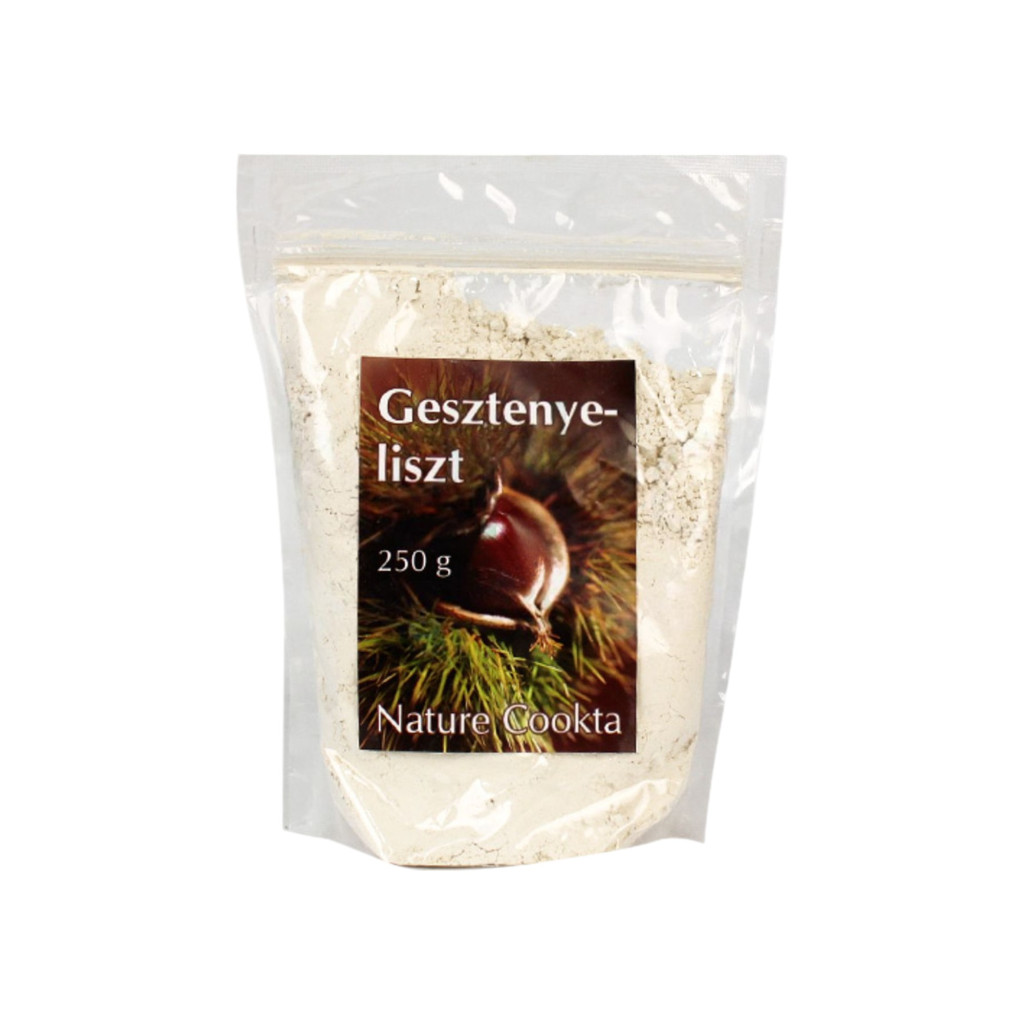
Product Description
First, they dry it at 45-50°C for 15-20 days, then shell it with a machine. After that, they remove the debris and sift everything. They transport it in plastic bags or metal containers, then sort it out. They sort it both with a machine and by hand, then grind it finely. Its texture is very similar to wheat flour.
It can replace the quantity specified in the recipe with chestnut flour up to 100%, but it can also be mixed with other flours.
Due to its strong aroma, it is recommended especially for those who like the taste of chestnut. It is particularly recommended for making breads and pastries, especially for dishes with hazelnut, almond, chestnut, honey, and chocolate flavors.
Compared to wheat flour, it contains fewer digestible (net) carbohydrates, with only 71.4 grams of carbohydrates per 100 grams of chestnut flour. Due to its low calorie content (only 344 kcal/1456 kj/100 g), it can be excellently incorporated into weight loss and diet programs.
Chestnut flour is rich in fiber, containing 10.58% fiber. Since one of the main problems of today is that our daily diet contains very little fiber, by using chestnut flour we can improve this ratio.
In Hungary, chestnut flour is a newer product on the palette of health foods, which does not cause complaints even for those suffering from chronic gastritis, however, it has been known in Italy for several hundred years, competing with wheat flour since medieval Italy. In France, it is also a popular ingredient for pastries.
Not recommended for those allergic to nuts!