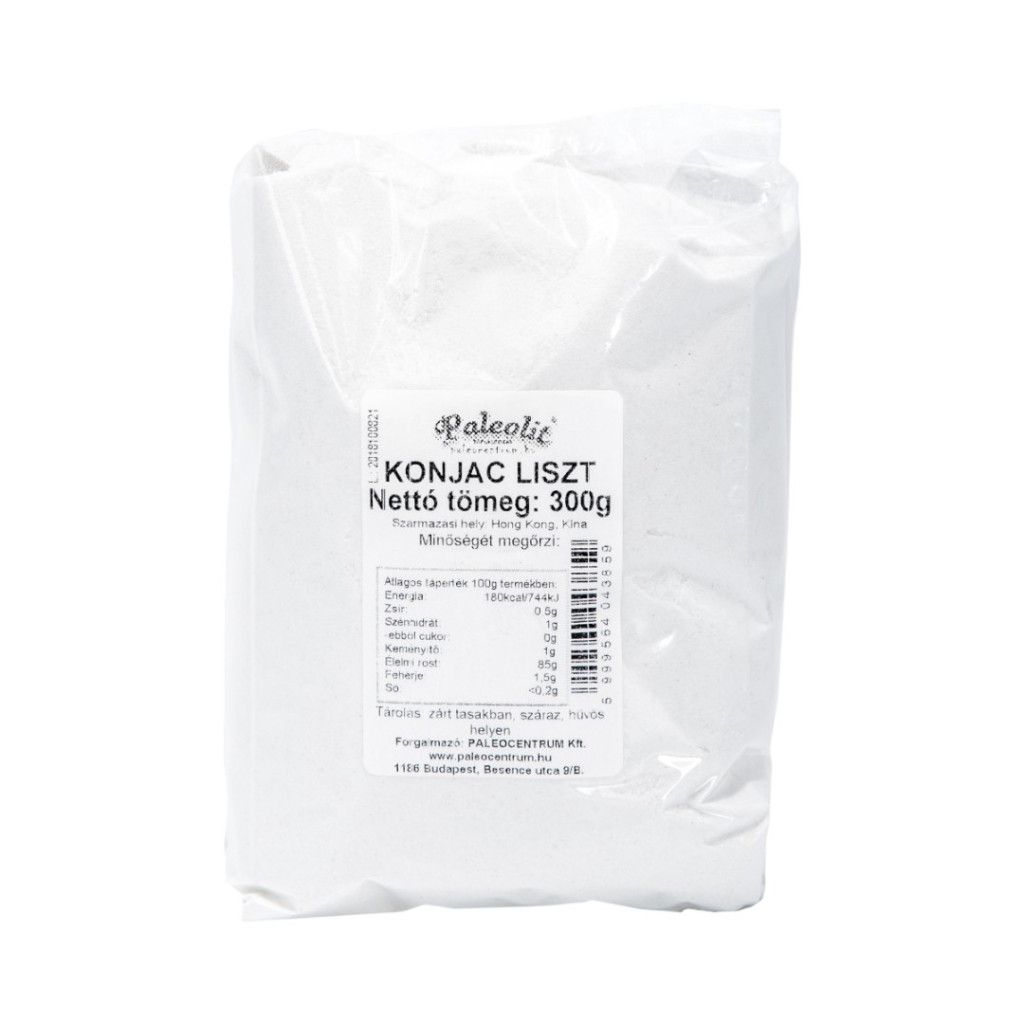
It replaces traditional flours, starches, and gelling agents when thickening soups, sauces, and stews. You can make carbohydrate-free puddings and fruit jellies with it, and it can be used as an additive for baked goods made from nut flours (up to 10% dry matter content, or add a spoonful or two, with 50 ml of water or other liquid). This way, you can achieve a texture similar to white flour in your baked goods. Nut flours lack gluten, which is what makes grain flours more viscous, and products made from them don't have a sawdust-like texture. Nut flours are gluten-free, which is good, but they can easily end up too dry, brittle, crumbly, or if too much liquid is added, they may not bake properly. Just a teaspoon of konjac flour can help you bake goods with a texture similar to those made from traditional flours.
It is excellent for those who want to lose weight because it has a low calorie content and is almost carbohydrate and fat free. Those looking to lose weight are advised to consume at least 4 g of flour or foods made from it daily (at least 2 times, 2 g of flour before lunch and dinner, half an hour before, with adequate fluid intake).
Glycemic index is very low, so it does not affect blood sugar levels.
(With 100 g of flour, you can thicken 25-30 liters of liquid, and make 5-6 boxes of devil's tongue capsules, which cost around 30,000 HUF)
When thickening foods, never just sprinkle it on top or pour it into hot, cooking food as it will form a huge lump. You should always mix it with a granular substance (salt, sweetener) and some cold liquid - and not wait for it to be completely dissolved, but swiftly, continuously stirring, pour it into the hot food.
To thicken soups, add 2-3 g of konjac flour to 700 ml of liquid
To make pudding: 4-5 g per 500-600 ml of liquid
Cold pudding recipe: 6 g flour for 500 ml liquid, let it stand for 30-60 minutes.
For baking with konjac flour: here too, only 1-2 grams of flour are used, obviously with a slightly (50-100 ml) larger amount of liquid. The texture of traditional baked goods and breads made from cereal flours can be almost completely achieved by using konjac flour.
Cognac flour is suitable for replacing eggs in baking.