Product Description
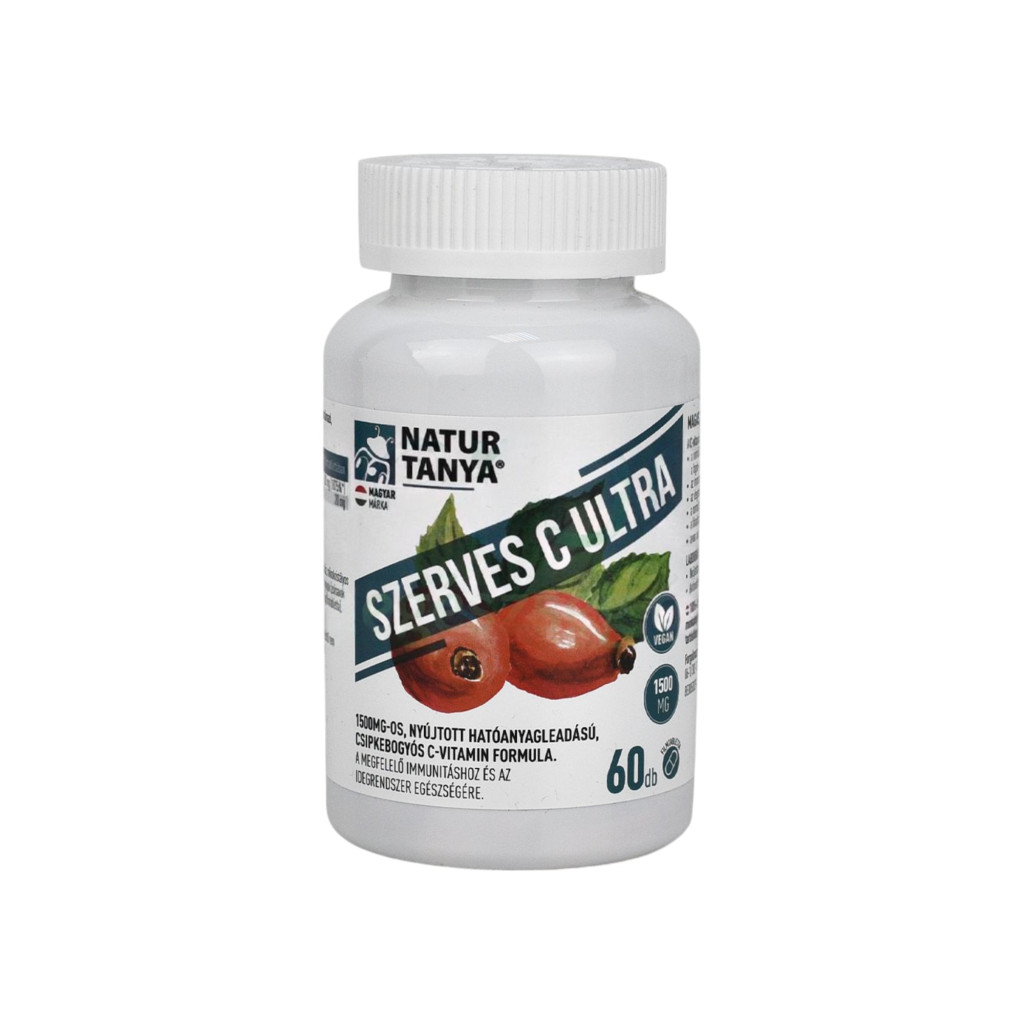
ORGANIC C ULTRA - NEWLY ENHANCED VITAMIN C FORMULA WITHOUT TITANIUM DIOXIDE, WITH ROSEHIPS
1500 mg, extended release rosehip vitamin C tablet. For proper immunity, and the health of the immune and nervous system. Our high-dose 1500 mg vitamin C formula provides extended (retard) release with laboratory confirmed, continuous vitamin C supply for 6 hours!
- EASILY DIGESTIBLE FILM COATED TABLETS WITH HIGH, 1500 MG VITAMIN C CONTENT
- WITH ELDERBERRY EXTRACT WITH ANTIOXIDANT EFFECT
- RELEASED SLOWLY, GRADUALLY IN THE BODY
- PROVIDES CONTINUOUS VITAMIN C SUPPLY FOR 6 HOURS
- We support the retard release by independent, accredited laboratory testing.
- VEGAN DIET SUPPLEMENT
- ARTIFICIAL PRESERVATIVES, COLORINGS, AND FLAVORS FREE
- NEW TITANIUM DIOXIDE FREE FORMULA, WITH COLORLESS COATING
- 1 TABLET PER DAY, ENOUGH FOR 2 MONTHS
NEW AND IMPROVED FORMULA
We pay close attention to ensuring that our products do not contain artificial preservatives, colorings, and flavors whenever possible, therefore our Natur Tanya® ORGANIC C ULTRA product has been reformulated.
Riboflavin and titanium dioxide, commonly used as colorants, have been removed and replaced with ingredients that are safe and function as colorless (transparent) coatings.
We developed our NATUR TANYA® ORGANIC C ULTRA product with the C-vitamin content to be released continuously (with modified release) in our body, providing continuous supply to the body for 6 hours.
THIS CAN BE SUPPORTED BY LABORATORY TEST RESULTS.
Test results:
- Vitamin C content, 1 hour: 26.7% (Requirement: 20-45%)
- Vitamin C content, 6 hours: 66.9% (Requirement: 60-90%)
VITAMIN C PHARMACOKINETICS
We would like to briefly introduce the pharmacokinetics of vitamin C (fate in the body) below.
- Intestinal absorption
Vitamin C is a water-soluble vitamin that is absorbed in the small intestine through a sodium-dependent active transport mechanism. The absorption of vitamin C is approximately 80-90% efficient at intakes of 30-180 mg. Due to saturation of the transport system, absorption efficiency gradually decreases at higher intake levels. - Transport in blood and fluctuations in plasma concentrations
Vitamin C is transported in the blood as free ascorbate anion and no specific binding protein has been identified. When daily vitamin C intake increases, plasma ascorbate concentration also increases in a sigmoidal (S-shaped) profile. In individuals with low plasma ascorbate levels, an increase in vitamin C intake leads to a significant rise in plasma ascorbate concentration, up to about 50 µmol/L, achieved with 60-100 mg/day of vitamin C.
Once vitamin C intake exceeds 100 mg per day, the curve progressively flattens until it reaches a plateau at around 70-80 µmol/L. These high plasma concentrations can only be sustained with daily doses of more than 200 mg.
Women reach the plateau in plasma ascorbate concentration with lower vitamin C intake than men, but the plateau value is similar between women and men. It is important to note that plasma ascorbate concentration decreases during pregnancy and is lower in smokers compared to non-smokers. - Distribution and metabolism in tissues
Vitamin C is distributed throughout all tissues. The vitamin is efficiently transported into cells in its reduced (ascorbate) and oxidized (dehydroascorbate) forms via active and facilitated transport systems, in the mentioned order. - Warehouses of the body and metabolic losses
According to pharmacokinetic models, the total amount of vitamin C in the body in adult men can vary from less than 0.3 grams to 1.5-2.0 grams depending on intake.
In healthy, non-smoking men aged 20-45, the maximum metabolic losses of vitamin C are estimated to be around 40-50 mg per day, which corresponds to approximately 45-50 µmol/L plasma ascorbate concentration. There are no available data on metabolic losses in women, and smokers tend to have higher losses than non-smokers at similar levels of vitamin C intake. - Elimination
Unabsorbed vitamin C can be found in feces, but intact ascorbate and its metabolites are mainly excreted in urine. The renal excretion of ascorbate increases with the rise of plasma ascorbate concentration and/or vitamin C intake.
In adults, urine is the main pathway for ascorbate excretion, and with a daily intake of 100 mg of vitamin C, approximately 25 percent of the ingested dose is eliminated in urine. The Panel notes that even at low plasma ascorbate concentrations, ascorbate is excreted in urine, and the excretion of ascorbate in urine significantly increases at plasma ascorbate concentrations exceeding 45-60 µmol/L. (source: EFSA NDA Panel (EFSA Panel on Dietetic Products, Nutrition and Allergies), 2013. Scientific Opinion on Dietary Reference Values for vitamin C. EFSA Journal 2013;11(11):3418, 68 pp.)
IMPORTANT INFORMATION: The intracellular ascorbate concentration curves as a function of vitamin C doses in healthy non-smoking men and women indicate that PLATEAUS WERE ACHIEVED WITH DAILY DOSES OF APPROXIMATELY 100-400 MG.
THEREFORE, IN DAILY, 400 MG OR LARGER INTAKE AMOUNTS (CONVENTIONAL AND NON-SUSTAINED RELEASE VITAMIN C), THE PLASMA CONCENTRATION OF VITAMIN C DOES NOT INCREASE, PARTLY DUE TO INCREASED C-VITAMIN EXCRETION IN THE URINE.
IS C-VITAMIN ONLY FOUND IN PAPRIKA?
Most fruits and vegetables are good sources of vitamin C, with about 90% of the population's daily intake coming from them. However, the content varies by species, with particularly large differences between crops. 100 grams of rose hips contain an average of 400 mg, pine needles 200 mg, parsley leaves 185 mg, tomato peppers 180 mg, green peppers 125 mg, cabbage 87 mg, apricots 50 mg, lemons 45 mg, and potatoes 24 mg of ascorbic acid (Lykkesfeldt, 2014 [16]).
Due to its favorable physiological effects and pleasant taste, rosehip has been used in our country for a long time as both a medicinal and food plant. In medicine, the dried, deseeded hips of dog roses, also known as wild roses (Rosa canina) and other wild rose species (e.g. Rosa pendulina), as well as the Japanese rose (Rosa rugosa), are used.
Vitamin C contributes to:
- For normal collagen formation, and thereby for the maintenance of normal conditions in blood vessels, bones, cartilage, gums, teeth, and skin
- For the normal functioning of the immune system
- For the normal functioning of the nervous system
- To maintain normal psychological function
- To reduce fatigue and exhaustion
- For optimal iron absorption
WHO DO WE RECOMMEND IT TO?
- To everyone looking to supplement their average diet
- For athletes with increased vitamin C needs
- Vitamin supplementation for pregnant women
- Smoking event
- Support for beauty care
- For people with iron deficiency
- Supplement to the treatment of cold and flu
- To complement the treatment of other inflammatory diseases
- During the recovery period following an illness
Dosage recommendation: Take 1 film-coated tablet daily, swallowed with plenty of liquid.
Number of servings in the product: 60
| Active ingredients in daily dose | 1 film tablet |
| Vitamin C | 1500 mg (NRV 1875%) |
| Dog rose (Rosa canina L.) | 20 mg |
NRV: Nutrient Reference Value recommended for adults.
Warning:
- Do not exceed the recommended daily amount!
- Dietary supplements do not substitute a balanced diet and healthy lifestyle!
- The product can be used from the age of 6.
- The product can be used with blood thinners.
- The product is suitable for diabetes.
- The product is suitable for use during pregnancy and breastfeeding
OGYÉI registration number: 28450/2022
Storage: Keep in a cool, dry place, out of reach of children!
100% HUNGARIAN-OWNED COMPANY. BY PURCHASING THE PRODUCT, YOU SUPPORT HUNGARIAN JOBS!
Ingredients: L-ascorbic acid, bulking agents (hydroxypropyl methylcellulose, microcrystalline cellulose), colorless coating [coating agents (polyvinyl alcohol, polyethylene glycol), talc], rosehip (Rosa canina L.) fruit extract, coating agent (fatty acids), anti-caking agent (magnesium salts of fatty acids).