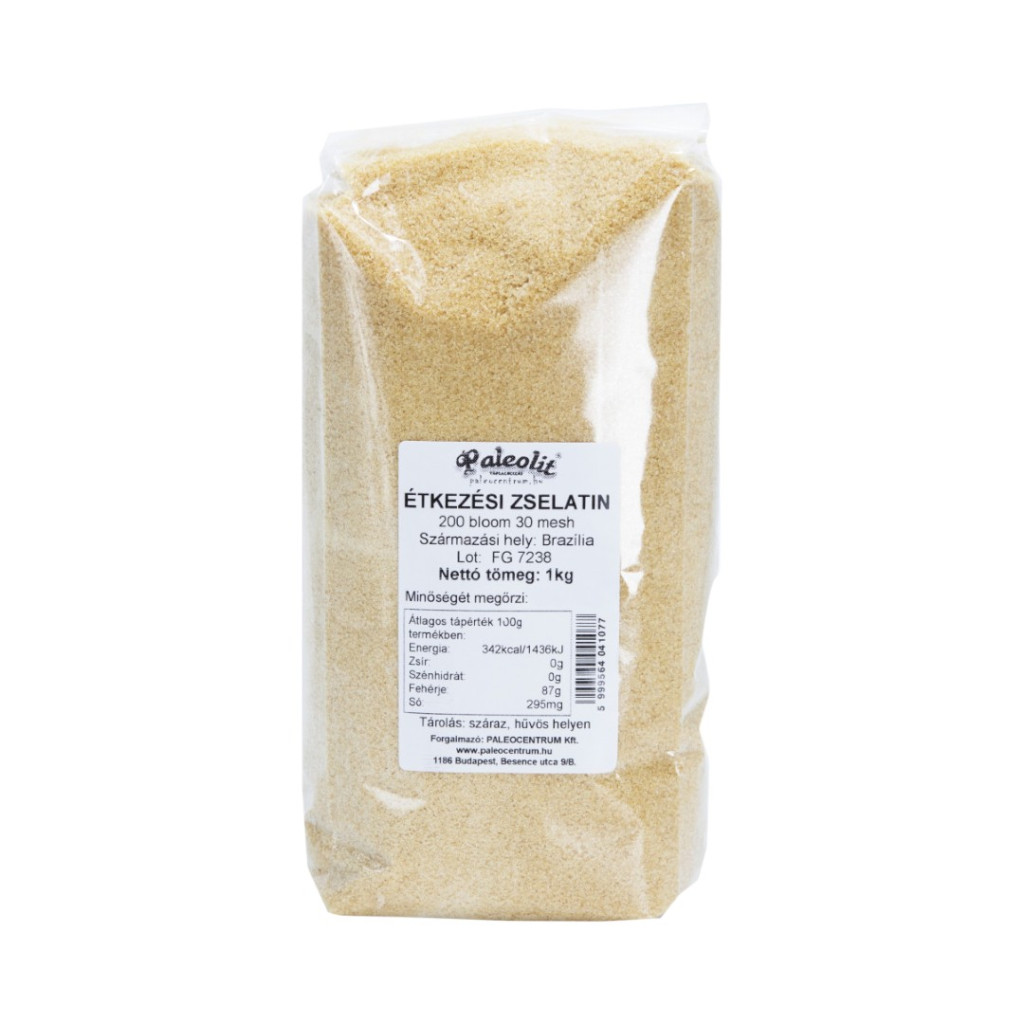
Gelatin is capable of absorbing five times its weight in water. It is the most common gelling agent, widely used in food and pharmaceuticals. Due to its animal origin, it can be replaced in vegetarian foods and for certain religious dietary laws (kosher, halal) with pectin, agar agar, carrageenan, alginate, hydroxypropylmethylcellulose.
- Most commonly found in ice creams, jellies, it is also used in low-calorie foods to replace fats because it creates a fat-like sensation in the mouth while its caloric content is very low.
- In medications, pharmaceutical capsules are primarily used for coating, making the capsule easier to swallow.
- In photography, silver halides are used to hold the emulsion.
- It is also used as a carrier material, for example, beta-carotene will dissolve in its aqueous solution and give a mild yellowish color to the solution (primarily in soft drinks).
- In some cases, match heads are also used as binding agents.
- Used in cosmetics, it is usually found under the name hydrolyzed collagen.
- During shooting exercises, objects made of gelatin are usually used for ballistic testing, as they break down similarly to muscle tissue.
- Synchronized swimmers use gelatin to fix their hair, as gelatin does not dissolve in the cold water of the pool, keeping the hairstyle in place.
- People suffering from tannin sensitivity use tannin substitutes in their diet.
There is no defined daily maximum intake of gelatin in food, and its side effects are unknown.
Package size: 1kg
Your Dynamic Snippet will be displayed here... This message is displayed because you did not provided both a filter and a template to use.