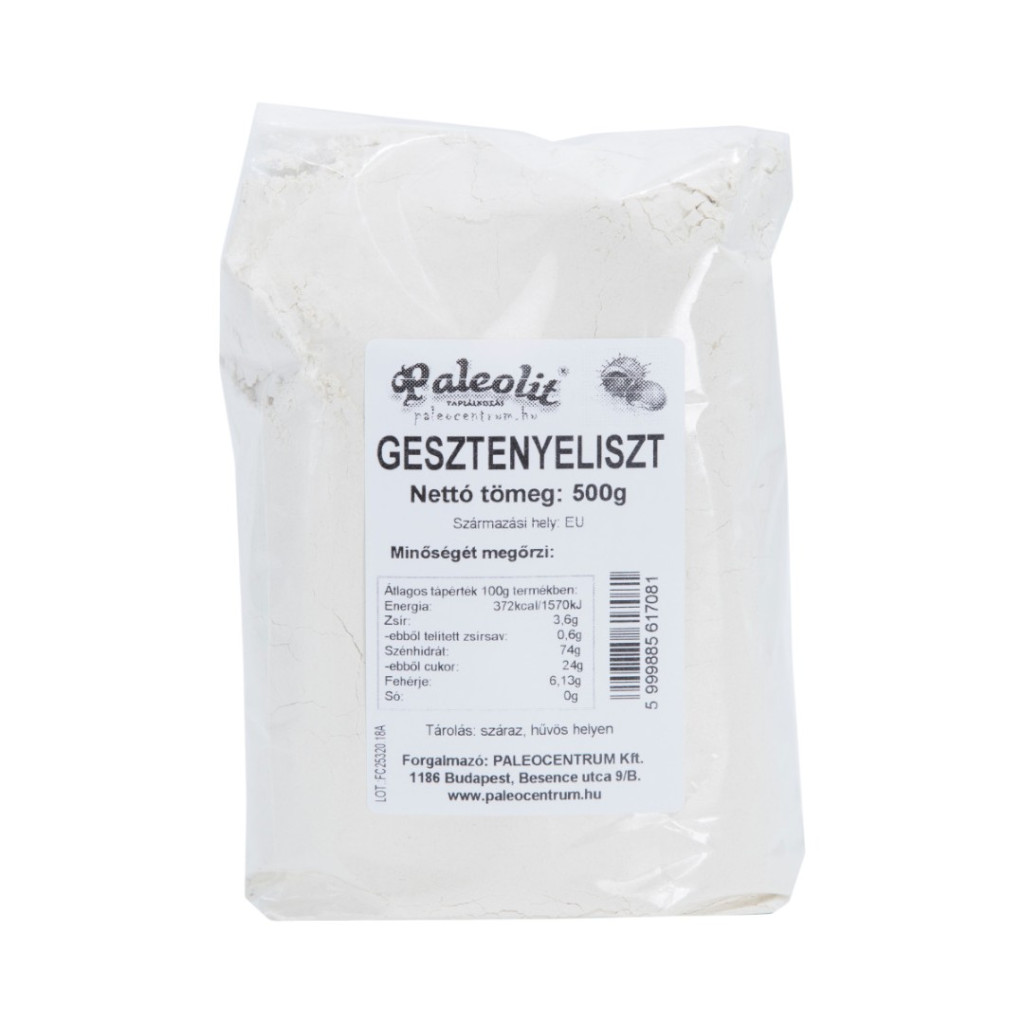
As a result, we get a versatile and delicious kitchen ingredient, which:
- completely gluten-free
- Suitable for preparing both savory and sweet dishes.
- It is also great for thickening foods.
- high in mineral content and fiber
You can substitute the quantity specified in the recipe with chestnut flour up to 100%, but you can also mix it with other flours. Due to its strong aroma, it is recommended for those who enjoy the taste of chestnuts. It is specifically recommended for baking bread and pastries, especially for dishes with hazelnut, almond, chestnut, honey, and chocolate flavors.
Chestnut flour is a newer product in Hungary on the palette of health food products, which does not cause any complaints for those suffering from chronic gastritis, but it has been known in Italy for centuries, where it was a competitor of wheat flour even in medieval Italy. It is also a popular ingredient in pastries in France.
Store in original packaging in a cool, dry place. However, after opening, especially in the summer, store in the refrigerator between 0-4°C to keep parasites away!
Although chestnut flour with a glycemic index of about 65 is considered high (it should be below 55 to fall into the low category), it is still lower than commonly used baking flours containing either gluten or gluten-free, such as white rice flour (GI=~95), potato starch (GI=~95), arrowroot powder (GI=~85), or white wheat flour (GI=~85). It is certain that chestnut flour is significantly more expensive and harder to find, but for those looking for lower glycemic index and gluten-free ingredients, chestnut flour can be a good choice instead of the white rice flour provided in recipes.
Ingredients: 100% chestnut
Package size: 500g